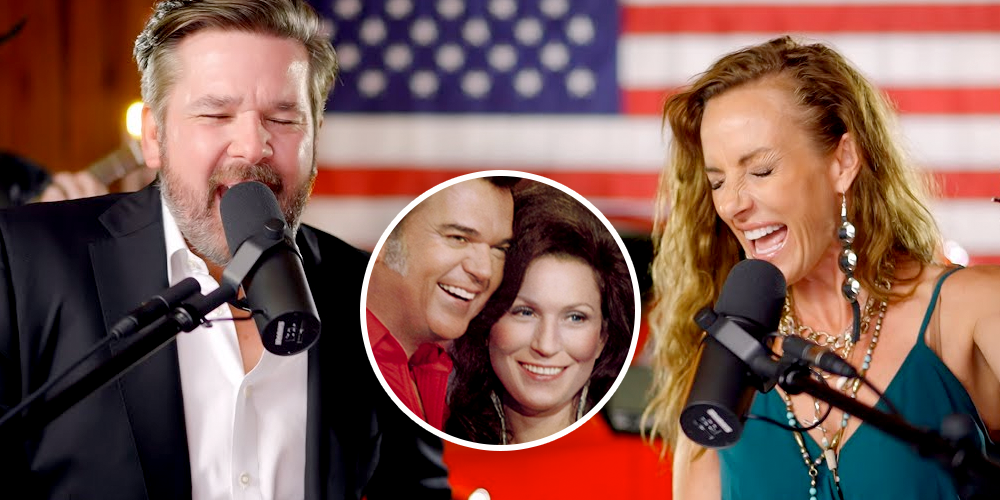
When George Jones showed up without his hair perfectly sprayed into place, the people around him knew what it meant.
He wasn’t going on stage.
There was a reason so many called him “No Show Jones.” In 1979 alone, he missed 54 scheduled performances. But according to his former booking agent, Wayne Oliver, there was an early warning sign long before a concert was officially canceled. You didn’t need an argument backstage or a call from management.
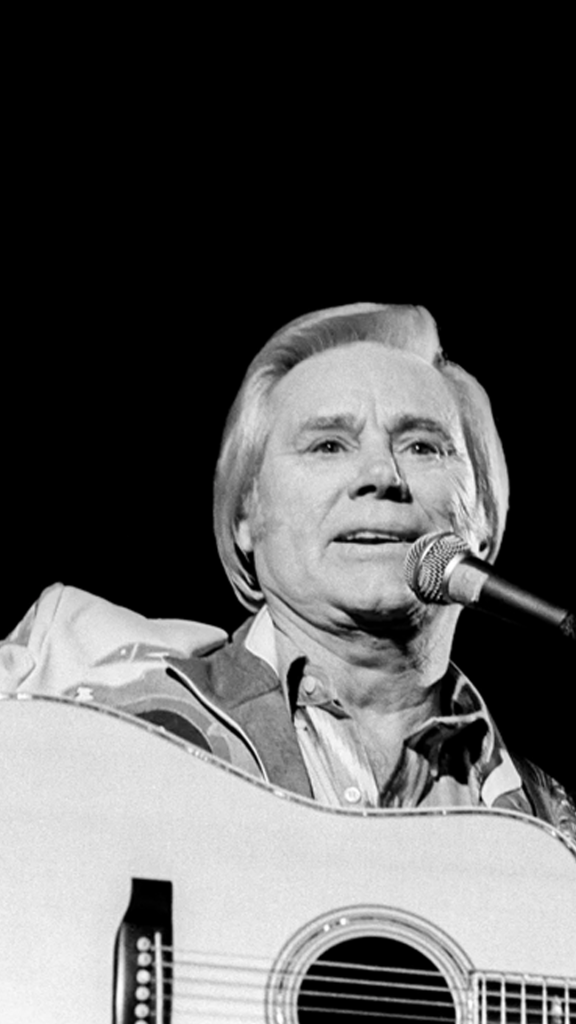
You just had to look at George’s hair.
“When he was straight, he was so particular, he would use a whole can of hairspray,” Oliver said. “It would be so stiff, I said, ‘George, a bug couldn’t even fly on your head.’”
When George was sober and focused, his hair looked perfect. Not a strand out of place. It was hard, polished, and carefully shaped. That was the version of George who showed up, sang his heart out, and gave the crowd everything they came for.
But when things went the other way, his hair told a different story.
Instead of neat and firm, it was wild and messy. Slumped over. Falling into his face. Sticking out in every direction, like even his hair had given up. The worse the hair looked, the worse the night was about to become.
Anyone who worked closely with George during his darkest years learned to read those signs quickly—and usually the hard way.
Wayne Oliver started working for George Jones and Tammy Wynette when he was just 20 years old. By then, George wasn’t just a country superstar. He was unpredictable. Powerful. Brilliant. And completely out of control.
Fans remember the legendary voice. The songs that cut straight through the heart. But behind the scenes, it was chaos. Missed flights. Sudden disappearances. Long nights that turned into longer mornings. And somehow, through it all, the hair never lied.
Oliver once shared a story from a show in Logan, Ohio. That day, he begged George to take the plane to the venue. But George refused. He said he wanted to take the bus instead. The moment he said it, Oliver knew something wasn’t right.
“I told the bus driver and the band, ‘Don’t let him off the bus until you get to Logan.’”
But by the next morning, George was gone.
The crowd had already started gathering early. Around 30,000 fans showed up, ready for the show. Tailgating. Waiting. Excited.
George Jones never arrived.
Looking for answers, Oliver wandered through the area and ended up talking to two women sitting in their front yard nearby.
They said, “He just left. Nicest man in the world. In fact, we had two bottles of wine.”
Sometime during the night, George had quietly stepped off the bus, jumped into a cab, and headed straight back to Nashville. No call. No warning. No explanation.
Just gone.
So when Wayne Oliver says George’s hair told the story, he wasn’t exaggerating. It wasn’t about style or vanity. It was more like a warning system. A signal everyone learned to watch for.
If George’s hair was stiff enough to stop a bug midair, there was still hope. If it looked like it hadn’t seen a comb in days, people started preparing for the worst.
Country music fans know George Jones as one of the greatest singers who ever lived. But his personal life was filled with pain. His addiction wasn’t funny or charming. It caused real damage—to shows, to relationships, and nearly to his entire career.
Even Tammy Wynette, who shared both success and heartbreak with him, once said, “Even though I couldn’t live with him, he’ll always be my favorite singer.”
Despite everything, the love for George never fully disappeared. Not from Tammy. Not from the fans. And not from the people like Wayne Oliver, who witnessed both the genius and the destruction up close.
Eventually, George Jones did find his way out. He got sober. He married Nancy Sepulvado. He found stability and started showing up again, both in life and on stage.
But for those who lived through the worst years, the memory remains clear.
You could always tell how bad things were about to get.
All you had to do was look at his hair.
Because when George Jones lost control, his hair was the first thing to show it.